
Managing multiple restaurant locations is not a matter of repeating the same playbook everywhere. Each store has its own volume, layout, staffing mix, ordering channels, and local habits. Guests, however, still expect the same quality and service from every location.
Most multi-unit operators already have SOPs, POS and kitchen display systems, training programs, and reporting tools. The challenge is not collecting more information; it is connecting those standards and systems to how work is actually performed. A company-wide average can look healthy while one location, shift, or station repeatedly falls behind.
The following seven steps provide a practical framework for improving consistency without ignoring the conditions that make each restaurant different.
Step 1: Standardize the process, not every store condition
Clear restaurant standard operating procedures give every location the same definition of good execution. Document the critical steps from preparation through handoff, assign ownership at each stage, and make the current version easy for employees to find.
Standards should also define the outcome, not only the task. For example, a shared definition of restaurant order accuracy helps locations measure missing items, incorrect modifiers, packaging, and handoff consistently. Local teams can adapt to layout or channel differences without changing what success means.
- Document the few workflow steps that create the greatest operational risk.
- Build frontline feedback into SOP reviews so procedures reflect real conditions.
- Define which local adaptations are acceptable and which standards cannot change.
Step 2: Connect your systems to the physical workflow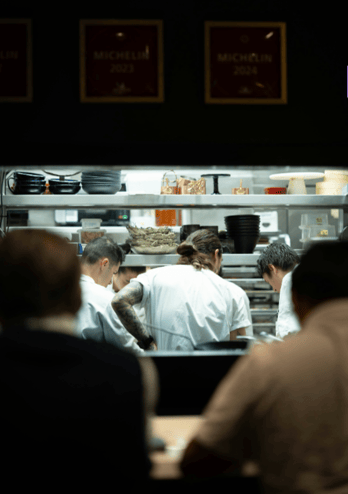
POS, KDS, inventory, labor, and scheduling systems provide essential records. Together, they show what was ordered, scheduled, sold, or marked complete. They do not always explain how a physical process unfolded inside the restaurant.
Understanding what POS data misses about order fulfillment helps operators choose technology that fills a specific operational gap instead of adding another dashboard. The goal is to connect reported outcomes with activity at preparation, assembly, staging, and handoff points.
- Centralize access to comparable data across locations.
- Define where digital tracking ends and manual execution begins.
- Prioritize tools that reveal a decision or intervention, not simply more data.
Step 3: Use restaurant performance metrics in context
Restaurant performance metrics are useful only when locations measure the same thing in the same way. Track outcomes such as sales, throughput, waste, remakes, labor, guest complaints, and order accuracy using consistent definitions. Then break results down by location, shift, station, and ordering channel.
Context prevents misleading comparisons. A delivery-heavy urban store should not be evaluated exactly like a suburban drive-thru. Understanding why restaurant errors disappear before reaching the dashboard also keeps operators from treating clean reports as proof of clean execution. Compare similar locations, look for outliers, and investigate the process behind the number.
Step 4: Fix the workflow behind the result
A slow ticket time, rising waste, or lower guest score is an outcome. Improvement begins when operators locate the workflow producing it. Map the order journey, observe where queues form, and identify steps that rely on memory, verbal communication, or repeated manual checks.
Keep the intervention narrow. A repeated delay at one station may call for a layout change, different staffing during peak volume, clearer ownership, or better synchronization with another station. Test one change, measure the result, and expand it only when the improvement holds.
- Prioritize bottlenecks with the greatest effect on throughput, cost, or guest experience.
- Separate symptoms from the step where the problem begins.
- Measure the workflow before and after making a change.
Step 5: Make training and communication specific
Training is more effective when it addresses an observable pattern. Telling a team to work faster, reduce waste, or be more accurate does not identify what must change. Showing that mobile pickup orders regularly miss drinks during the dinner rush gives a manager something concrete to investigate and coach.
Use a central knowledge library for current procedures, provide short refreshers when processes change, and create feedback channels between store teams and operations leadership. Frontline employees often see friction before it appears in company reporting.
Step 6: Centralize inventory and restaurant quality control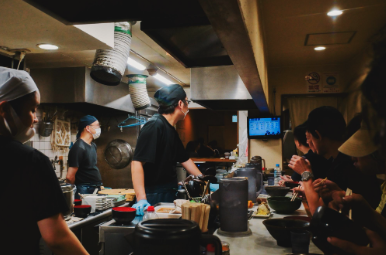
Centralized inventory and supplier management help locations maintain consistent ingredients, packaging, and availability while reducing stock-outs and over-ordering. Shared supplier standards and real-time stock visibility also make it easier to distinguish a local process issue from a broader supply problem.
Restaurant quality control should follow the same logic. Define the preparation, portioning, assembly, packaging, and service standards that matter most, then monitor the high-risk steps consistently. Periodic audits remain useful, but they should guide continuous improvement rather than serve as the only view of day-to-day execution.
Step 7: Build a repeatable improvement cycle
Sustainable improvement is a cycle: observe the workflow, isolate the problem, test a focused change, measure the outcome, standardize what works, and continue watching for drift. This prevents one-time initiatives from fading as staffing, volume, menus, and ordering channels change.
Start with one high-impact workflow at a small group of comparable locations. Establish a baseline, identify where performance diverges, and test an intervention. A successful practice can then be adapted across similar stores with evidence behind it.
What operational visibility adds across locations
Operational visibility closes the gap between what systems report and what teams actually do. It helps leaders see where execution varies across stores, where bottlenecks form, and whether a change improves performance over time.
Plainsight makes the physical moments behind preparation, assembly, fulfillment, and handoff visible across locations. Operators can detect operational drift earlier, compare execution across stores, and address problems before they affect speed, accuracy, waste, or guest experience.
Build improvement around what actually happens
Improving restaurant operations across multiple locations starts with a shared standard and a reliable view of execution. Operators can then compare stores fairly, diagnose the process behind a performance gap, and scale changes that produce measurable results.
Choose one workflow that affects cost, throughput, or guest experience. Follow it from beginning to end at a few comparable locations, identify where execution begins to differ, and focus the first improvement there. If your current systems show the result but not the process behind it, explore how Plainsight makes restaurant execution visible across locations.
No Comments Yet
Let us know what you think