
Restaurant order accuracy is the percentage of orders delivered exactly as requested, across dine-in, takeout, drive-thru, and delivery.
What Counts as “Accurate”
- Right items: nothing missing, nothing wrong
- Right modifiers: allergies, substitutions, doneness, spice level, “no ice”
- Right quantities: sides, sauces, condiments, utensils
- Right packaging: correctly bagged, sealed, and separated for off-premise orders
- Right recipient: table, seat, car lane, delivery driver, or pickup shelf match
For a single restaurant operation, that is more of a service quality question. For a multi-location operator, that’s a visibility question: is Location #12 hitting these marks just as consistently as Location #1, and how would you know if it wasn’t?
How It’s Measured
Order accuracy rate (%) = (Total orders − Incorrect orders) ÷ Total orders × 100
“Incorrect” typically covers guest-reported missing/wrong items, kitchen remakes, refunds, and delivery platform error codes.
Enterprise and fast food chains report accuracy rates from 85.3% to 95.2%, with drive-thru averaging 85-86% and 98%+ considered the benchmark for protecting brand reputation. Consumer-reported error rates tend to run higher than audited operator data, so track self-reported scores and internal QA separately rather than blending them.
For multi-location operators, the number that matters most is the spread between your best and worst location. A 95% average can hide a location running at 80% or lower.
Why It’s Harder to Manage Across Locations
A single restaurant fixes an accuracy problem with a conversation on the line. A ten- or hundred-location operation can’t do that. The same problem shows up differently at each site and is usually already costing money before it’s visible in complaint data.
Drift starts small: a kitchen team adjusts a portion size or a prep step without documenting it, and over weeks each location develops its own version of the process. Left unchecked, these small deviations compound into measurable performance problems well before corporate notices.
The cost adds up fast, a single misheard or mis-entered order can run $18–$25 in refunds/waste, and result in the loss of repeat business. Multiply that across locations making the same category of error, and it becomes a line item on the P&L.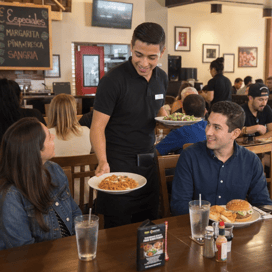
Common Causes of Inaccuracies
- Miscommunication with customers, worsened by noisy environments
- Undertrained staff, especially at newer locations without institutional knowledge
- Handwriting or manual entry errors
- Inconsistent processes between locations, the same item prepared differently store to store
- Technology configured differently at each site, which just relocates the inconsistency rather than fixing it
Five Practices for Multi-Location Order Accuracy
1. Standardize the process and make it travel. Centralized, version-controlled SOPs instead of location-specific habits. Menu and modifier logic built into the ordering system, not left to memory. Order repeat-back required everywhere, not just at strong-manager locations.
2. Build training that doesn’t depend on who’s in the kitchen. Corporate locations run on years of accumulated knowledge; new or franchise locations don’t have that safety net. Standardize onboarding and refreshers so accuracy doesn’t rely on having an experienced GM on shift.
3. Centralize visibility instead of relying on store-by-store reporting. Not more manual checks at the register, but the ability to see which locations and stations are driving errors before they hit review scores. Platforms like Plainsight are built around this kind of cross-location visibility, worth a look if your current stack logs data but doesn’t surface it.
4. Double-check orders, and compare results across the network. Confirmation at placement and before handoff still matters store by store. At scale, the value comes from comparing that data location-to-location, not just by tracking trends over time.
5. Make accountability network-wide, not store-level. Set accuracy targets at the network level, tracked per location. One low-accuracy site affects trust in the whole brand. Build a process for underperforming locations to adopt what’s working for the top performers.
Building Consistent Order Accuracy Across Every Location
Strong order accuracy comes from standardized processes, consistent training, and clear visibility across the restaurant network. Together, these practices help operators identify recurring errors, address performance gaps, and prevent individual locations from drifting away from brand standards.
A more consistent operation reduces refunds and waste, protects margins, and gives customers a reliable experience at every location. With the right systems in place, restaurant brands can turn order accuracy into a measurable and sustainable advantage.
FAQ
What is a good order accuracy rate for a restaurant chain?
Most multi-location operators target 98%+, though enterprise benchmarks typically fall between 85.3% and 95.2% depending on channel and measurement method.
How does order accuracy vary across locations in the same chain?
Even with identical menus and SOPs, locations drift over time from staff turnover, informal process changes, and inconsistent tech setup, which is why a single company-wide average can hide underperforming locations.
What causes the biggest order accuracy problems at scale?
Undocumented process drift, inconsistent training, and fragmented technology across sites tend to cause more damage than any single in-store mistake.
How do you measure order accuracy across multiple locations?
Track it per location and per station, not as one blended number, and run regular comparisons to catch sites drifting from network standards.

Introducing OpenFilter 1.0: A New Foundation for Production Vision AI
Customer Complaints Are Not an Order Accuracy Metric

No Comments Yet
Let us know what you think