

Software testing has decades of maturity.
Developers know how to write unit tests, integration tests, and end-to-end tests. Inputs are predictable, outputs are deterministic, and failures are easy to reproduce.
Computer vision systems are fundamentally different.
When you deploy a vision application, you’re not just testing code, you’re testing how machine learning models behave in the real world. And the real world is messy.
That’s why testing computer vision systems is significantly harder than testing traditional software.
1. The Inputs Are Not Deterministic
Traditional software behaves predictably.
If you give a function the same inputs, you should get the same outputs every time. That makes testing straightforward. Computer vision systems operate on visual data, which is inherently variable.
Two frames of video that appear identical to a human can still differ because of:
- lighting changes
- camera exposure
- motion blur
- occlusion
- background variation
- compression artifacts
Even slight changes in the environment can affect model behavior. A system that performs perfectly in a controlled dataset may fail when exposed to real-world video streams.
.jpg?width=2400&height=1792&name=A_split-scene_visual_showing_t_Nano_Banana_Pro_87220%20(1).jpg)
2. The Real World Is the Test Environment
In software engineering, most testing happens in controlled environments. Developers create synthetic inputs and verify deterministic outputs. Computer vision systems must operate in environments that cannot be fully simulated.
Consider a traffic monitoring system:
- Rain changes visibility
- Shadows move throughout the day
- Vehicles appear at unusual angles
- Cameras get dirty or misaligned
These factors create edge cases that are difficult to anticipate during development.
A model that performs well during testing may degrade when deployed against live camera feeds.
3. The Outputs Are Probabilistic
Traditional software typically produces binary outcomes. A test either passes or fails. Computer vision models produce probabilistic predictions, such as confidence scores for detected objects.
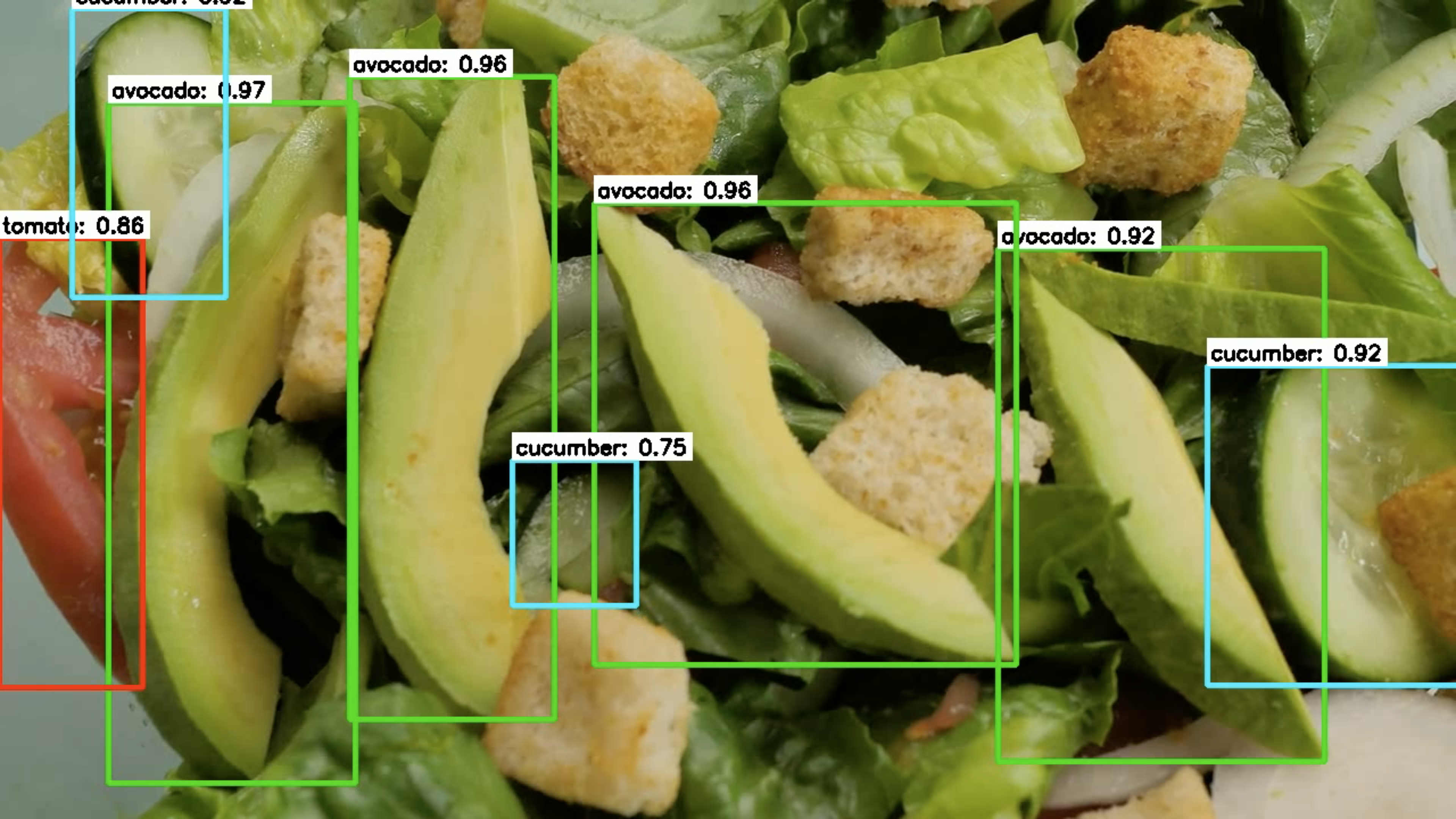
For example:
- A model might detect an avocado with 92% confidence
- Another version might detect the same avocado with 88% confidence
Is one better than the other?
That question is not always easy to answer.
Testing vision systems often involves evaluating metrics like:
- precision
- recall
- false positives
- false negatives
But even those metrics don’t fully capture how the system behaves in production.
4. The System Changes Over Time
Software systems usually behave consistently unless code changes. Computer vision systems evolve even when the code stays the same.
Changes in the environment can cause models to behave differently:
- seasonal changes
- new objects appearing in scenes
- camera hardware degradation
- changes in traffic patterns or human behavior
This phenomenon is often referred to as model drift. As a result, testing isn’t a one-time process—it’s continuous. Vision systems must be evaluated regularly to ensure they still meet performance expectations.
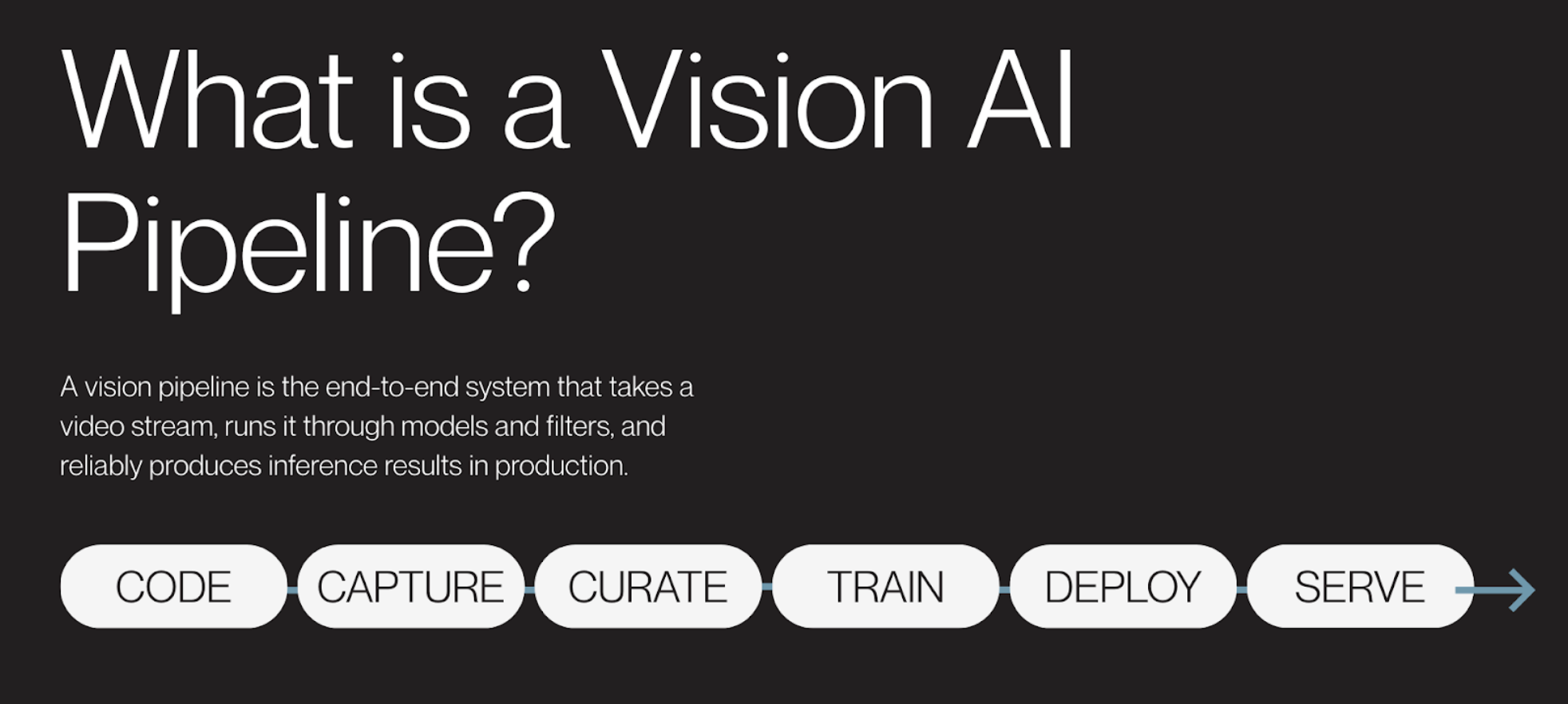
5. The System Is More Than the Model
Testing a computer vision system involves more than evaluating the model.
The full system typically includes:
- video ingestion
- preprocessing pipelines
- inference engines
- orchestration systems
- downstream data pipelines
Failures can occur anywhere in this chain.
A model might work perfectly, but the system can still fail if:
- the video stream disconnects
- the pipeline stops processing frames
- infrastructure fails to deploy correctly
Testing must cover the entire pipeline, not just the model.
6. Creating Test Data Is Expensive
In traditional software testing, generating test inputs is cheap. Developers can create thousands of test cases programmatically. Computer vision testing requires labeled video data, which is expensive to produce.
Teams must:
- collect video datasets
- annotate objects and scenes
- curate evaluation datasets
Even then, the dataset may not cover the diversity of real-world conditions. That makes it difficult to create comprehensive test suites.
7. Testing Requires Operational Visibility
In traditional software systems, developers can observe logs and metrics to debug failures. Vision systems require visual observability. Teams need to see:
- what frames were processed
- what objects were detected
- what the model actually “saw”
Without this visibility, debugging becomes nearly impossible. You may know the system failed, but not why.
The Solution: Treat Vision Testing Like a System Problem
Because computer vision systems operate in dynamic environments, testing must go beyond traditional approaches. Effective testing requires:
- curated evaluation datasets
- automated pipeline testing
- continuous evaluation of model performance
- visibility into live system behavior
In other words, testing computer vision isn’t just about validating models. It’s about validating the entire vision pipeline from video ingestion to inference and output.
The Future of Vision Testing
As computer vision systems become more widely deployed, testing frameworks will evolve. We’re already seeing the emergence of platforms that provide:
- structured evaluation pipelines
- automated testing against curated video corpora
- regression testing between model versions
- real-time monitoring of deployed systems
These tools will make it easier for developers to treat computer vision like production software.
But one reality will remain: Testing vision systems will always be harder than testing traditional software, because the real world will always be part of the system.
From Pilot to Production: What It Really Takes to Scale AI Across 300+ QSR Locations
What Is Synthetic Data?
No Comments Yet
Let us know what you think