

In conversations with large food service operators across Quick Service Restaurants (QSRs), fast casual, and commissary environments, one theme emerges as teams look to scale AI pilots into production deployments across hundreds of locations.
There’s a pattern that shows up almost every time.
Most AI initiatives in the restaurant industry do not fail because the model underperforms. They fail because they were designed and refined in a controlled, carefully managed pilot, not in a live, production environment which varies store to store and where process compliance gives way to expediency during peak times.
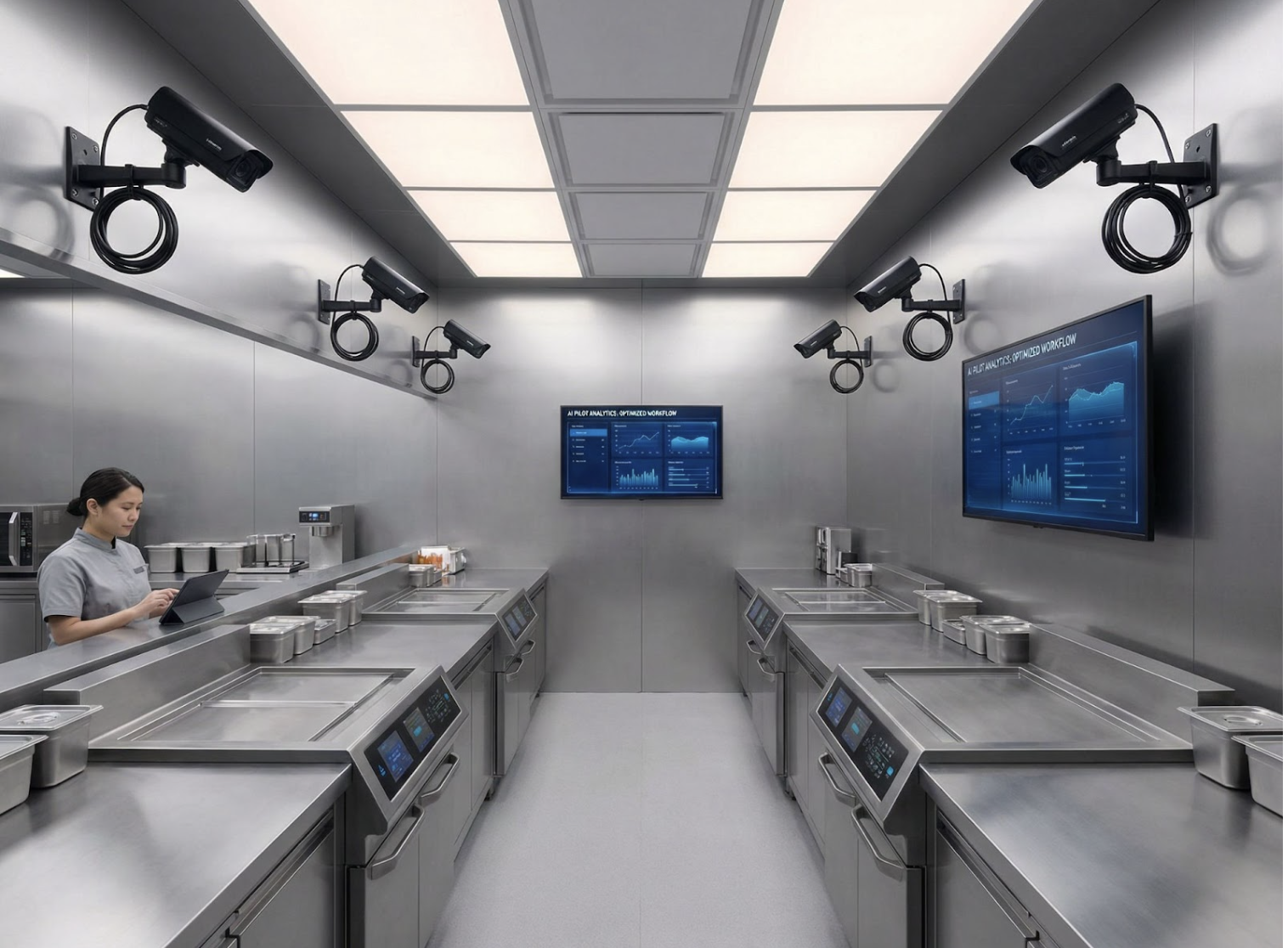
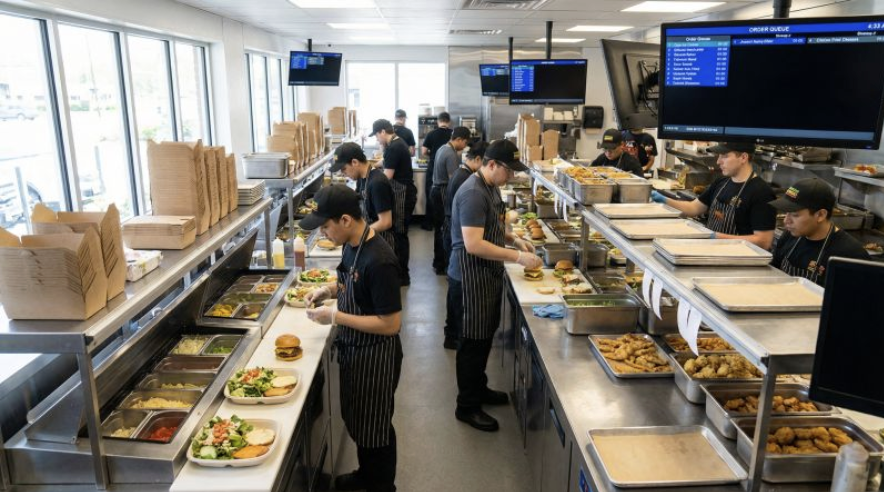
In a pilot store, conditions are curated. Lighting is stable. Cameras are optimally positioned. Hardware is standardized. Engineering teams are watching performance closely, coaching staff as needed. Under those circumstances, computer vision performs well. Order accuracy improves. Assembly errors are detected. The business case appears straightforward.
But the moment you scale beyond a handful of stores, the environment changes in ways that most pilots never account for.
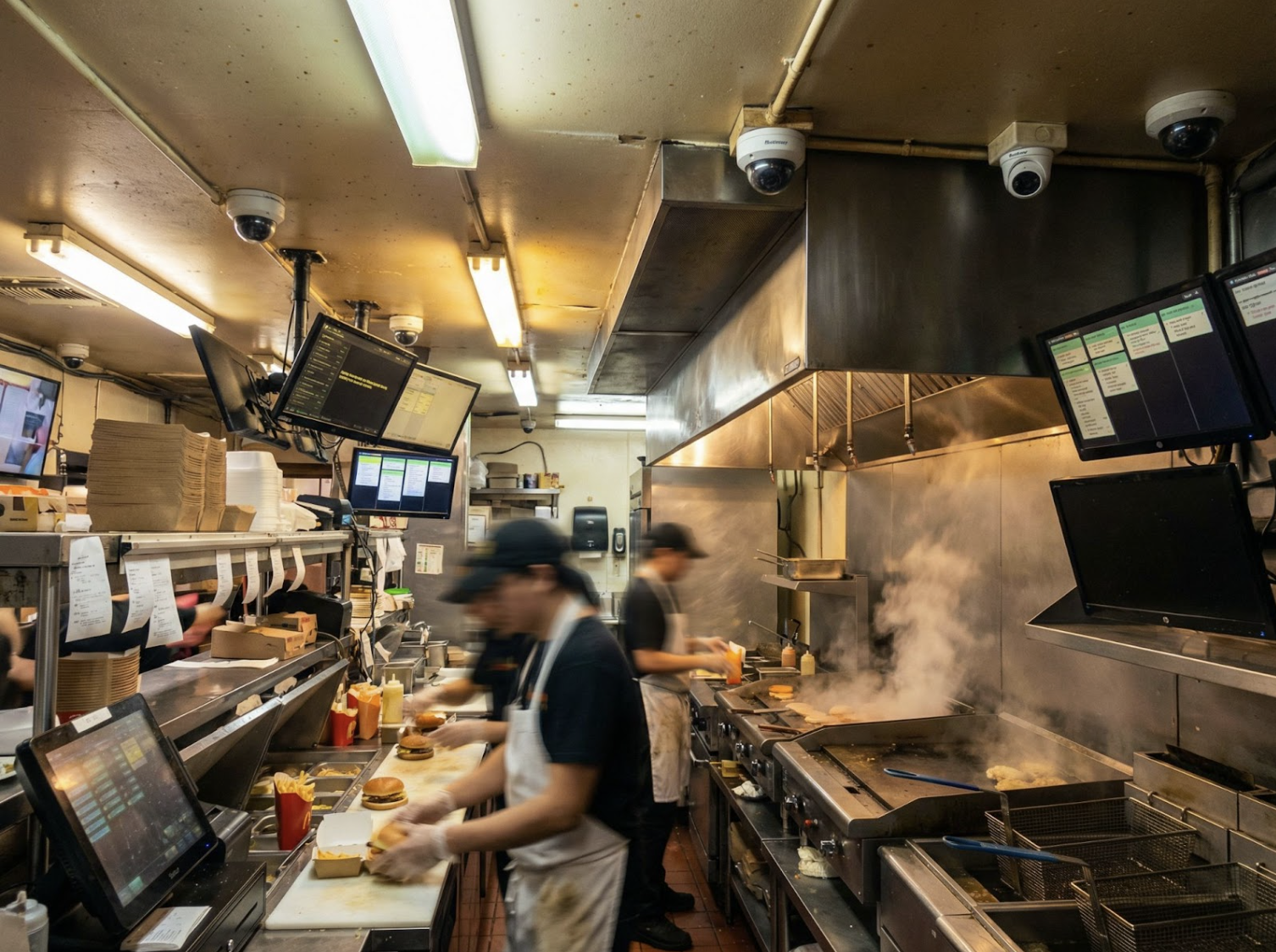
Ceiling heights vary. Equipment gets moved. Franchisees make independent operational decisions. Lighting temperature shifts throughout the day. Steam and glare interfere with image quality. Cameras were installed years apart, often from different vendors. During peak-hour throughput, occlusion and motion blur create edge cases that simply do not exist during test runs. The AI model may still be correct, but everything around it is subtly different.
Deploying AI in the restaurant industry at scale is not primarily a machine learning challenge: it is an infrastructure and orchestration challenge.
For enterprise operators running 300 or more locations, the real problem is not whether a model can detect an incorrect build. The real problem is whether that system can operate consistently across different preparation environments, integrate cleanly into existing QSR software stacks, and deliver measurable impact without constant human intervention.
At its core, food service operations suffer from a visibility gap. POS, ERP, and digital ordering systems report what should have happened. They do not verify what actually occurred at the assembly line, the pass window, or the prep table. As digital and delivery volume increases, that gap widens. When a significant portion of orders are off-premise, a single incorrect build is no longer a quick fix at the counter. It becomes a refund, a remake, a delivery dispute, and often a negative review.
Order accuracy is therefore not an innovation metric. It is a margin protection metric.
In almost every deployment we see, order accuracy becomes the clearest ROI anchor. Incorrect orders drive direct product waste, incremental labor, platform penalties, and long-term customer lifetime value erosion. Yet dedicating full-time quality control staff in high-volume kitchens is neither practical nor economically viable. Manual checks consistently break down under peak-hour pressure.
Computer vision infrastructure changes that dynamic, but only if it is built for production realities.
That means architecting for variability from day one. It means assuming camera heterogeneity rather than requiring standardization. It means handling occlusion, inconsistent lighting, and layout differences as baseline conditions rather than edge cases. It means deploying edge-first so that latency, bandwidth constraints, and privacy concerns do not undermine performance or stakeholder buy-in.
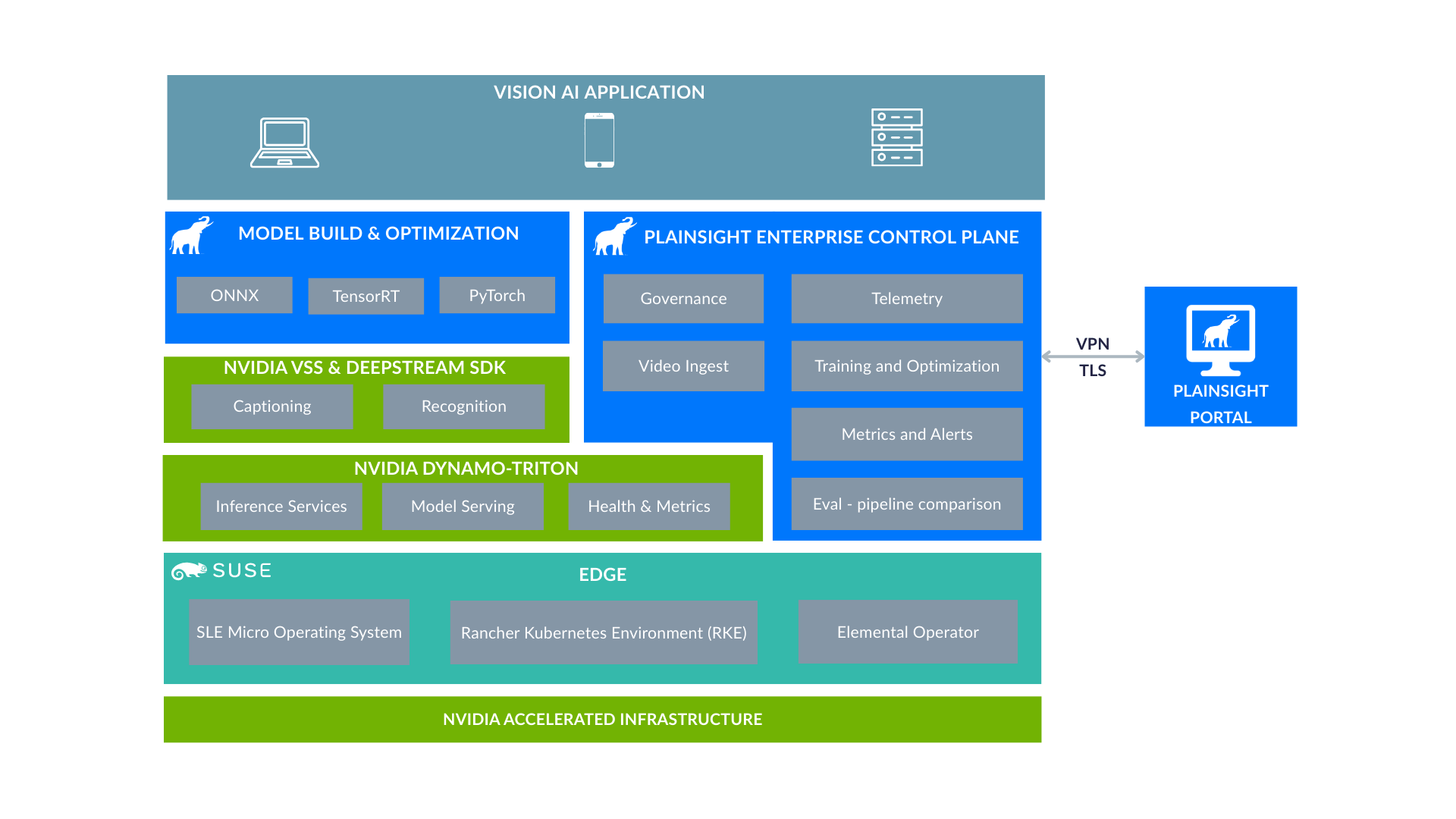
Edge-first architecture is not just a technical preference. In distributed food environments, it reduces operational fragility. It allows real-time verification at the source and minimizes the need for centralized video storage. For IT and security teams, this is often the difference between theoretical interest and production approval.
Equally important is integration. AI systems that sit outside existing workflows rarely drive sustained adoption. If insights do not connect directly into POS environments, kitchen display systems (kds) workflows, or kitchen display system software, they create friction rather than value. Production-ready QSR software enhancements must reinforce existing operational rhythms, not compete with them.
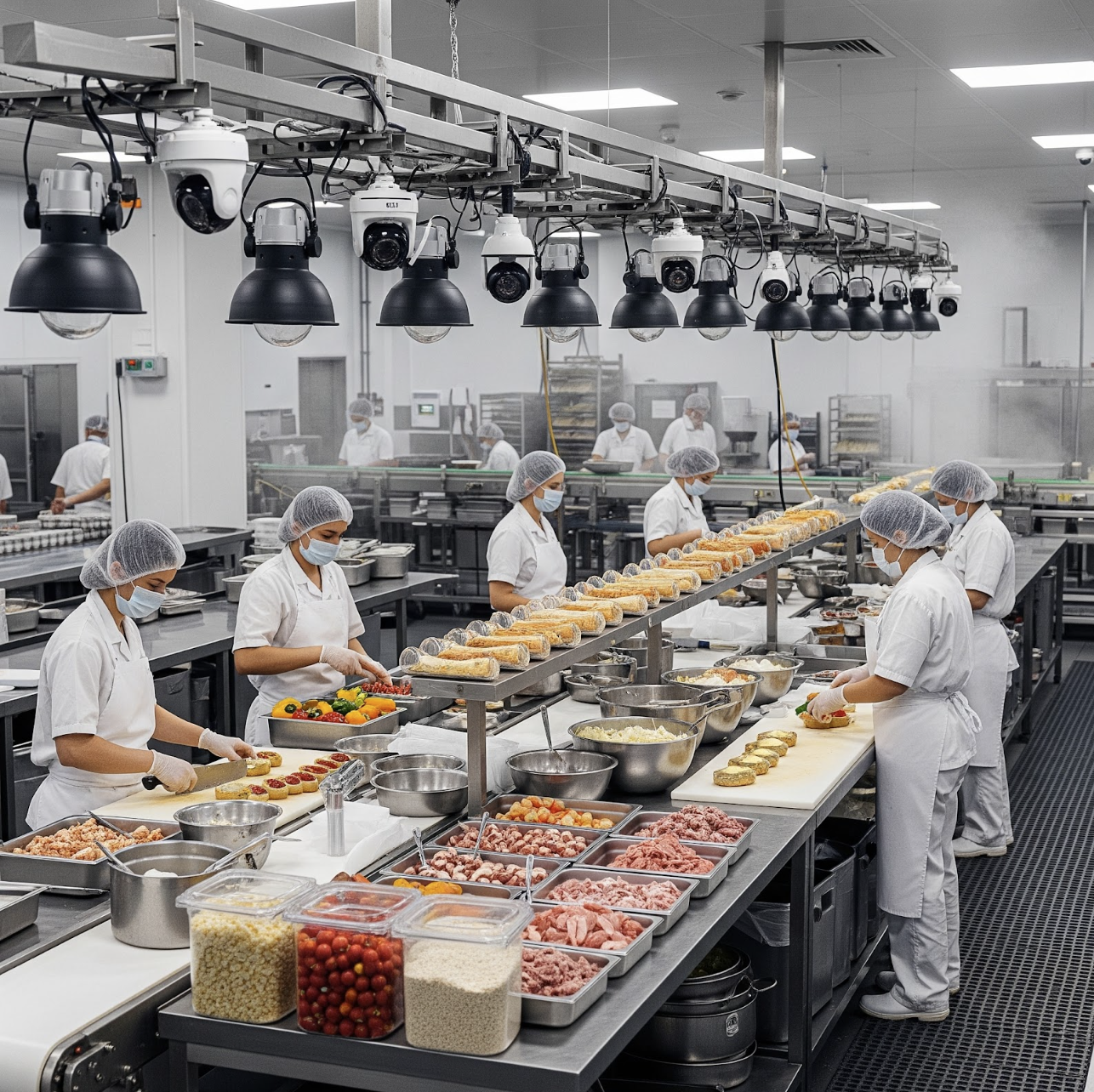
When designed correctly, vision becomes a real-time operational control layer.
It bridges the gap between digital systems and physical execution. It enables operators to benchmark performance across stores, identify peak-hour bottlenecks, detect back-of-house inventory gaps before they surface at the line, and intervene before small breakdowns escalate into customer-facing failures.
This is where broader restaurant industry technology trends are heading. The market is moving beyond proving that AI can recognize objects on a counter. The real competitive advantage comes from operationalizing that capability across hundreds of locations in a way that is resilient, measurable, and privacy-conscious.
It is also critical to position these systems correctly inside the organization. In high-volume food service, adoption depends on trust. The platform must be framed as process verification, not employee surveillance. No facial recognition. No identity tracking. Customers retain ownership of their video, models, and derived data. When leadership, legal, and store-level teams align around process improvement rather than performance monitoring, expansion becomes materially easier.
The difference between a stalled AI pilot and a scaled production system is rarely the model itself. It is the discipline applied to infrastructure, integration, and change management.
If you are evaluating AI in the restaurant industry today, the question is not whether a computer vision model works in a controlled store, it absolutely can. The issue is whether your computer vision infrastructure is engineered to survive real-world variability across 300 or more locations, integrate into your existing software ecosystem, and deliver sustained improvements in customer experience, order accuracy and throughput under peak-hour conditions.
Production success is not about demonstrating intelligence, it is about building systems that continue to perform when the environment refuses to cooperate.
If you're assessing where computer vision can drive operational impact across your QSR network, explore production-ready use cases and calculate exactly how much you could be losing—with solutions built to scale in live environments.
Why Testing Computer Vision Is Harder Than Testing Software

What Is Synthetic Data?
No Comments Yet
Let us know what you think