Introducing OpenFilter 1.0: A New Foundation for Production Vision AI

5 min read
May 18, 2026

Today, we’re excited to announce the release of OpenFilter 1.0 — a major milestone in our mission to make production-grade Vision AI simpler, more modular, and dramatically easier to scale.

OpenFilter was created to solve a challenge we saw repeatedly across industries: computer vision projects often succeed in demos but struggle in production. Teams end up fighting brittle pipelines, fragmented tooling, infrastructure complexity, and deployment overhead instead of focusing on delivering business value.

With OpenFilter 1.0, we’re introducing a stable, open, and extensible foundation for building real-world vision workloads using reusable filters and modular pipelines.

What Is OpenFilter?

OpenFilter is an open-source runtime and development framework for building image and video processing pipelines using modular components called filters.

A filter combines machine learning models and application logic into reusable building blocks that can be connected together into scalable workflows. Developers can chain filters together to create powerful Vision AI applications without rebuilding infrastructure for every project.

The platform is designed to simplify how teams:

  • Build and deploy computer vision applications
  • Connect models, video streams, and business systems
  • Scale from prototypes to production environments
  • Run workloads across cloud, edge, CPU, and GPU environments
  • Integrate multiple models and frameworks without vendor lock-in

OpenFilter supports popular open-source technologies including PyTorch, OpenCV, RTSP streams, MQTT, REST integrations, and custom models such as YOLO.

Why OpenFilter 1.0 Matters

This release represents the transition from an evolving runtime into a stable and production-ready platform.

OpenFilter 1.0 establishes a consistent abstraction layer for Vision AI pipelines while preserving the flexibility developers need to support diverse workloads and deployment models.

The result is a framework that helps organizations:

  • Reduce development time for Vision AI systems
  • Lower operational complexity
  • Improve pipeline portability and reuse
  • Reduce GPU inference costs through more efficient orchestration
  • Standardize deployment patterns across teams and projects

Whether you are building quality inspection systems, retail analytics, security workflows, industrial automation, or edge AI applications, OpenFilter provides a unified way to operationalize visual intelligence.

Key Features in OpenFilter 1.0

Declarative Configuration Foundations

One of the most important advancements in OpenFilter 1.0 is the introduction of declarative configuration foundations.

This release introduces structured validation and schema-driven configuration for filters. Alongside the runtime validation OpenFilter has always done, each filter now also publishes a build-time JSON Schema artifact — so consumers can validate, document, and render configuration UIs against a filter without ever running it.

The initial implementation prioritizes broad compatibility: the new schema base classes ship reference-migrated in filter-template and filter-sam3-detector, and every other filter in the library keeps working unchanged through the runtime fallback.

On the schema roadmap — in active development across openfilter and the Plainsight platform, not part of 1.0:

  • Registry-addressable schemas. A signed schema attestation will accompany each published image, so consumers will be able to pull a filter’s full configuration contract — versioned and signed — without downloading the image itself.
  • Pipeline-graph validation. Orchestrators and platforms that ingest OpenFilter schemas will be able to validate whole pipeline graphs at edit time — missing required params, type mismatches, managed-field violations — surfacing problems before the pipeline runs.
  • Schema-rendered configuration UIs. Because the contract is fully declarative, third-party tools, internal dashboards, and custom operator surfaces will be able to render filter configuration UIs straight from the schema — tagged unions, conditional visibility, structural references — without writing per-filter form code.
  • Deployment-environment preflight. Submit-time checks for environment-dependent fields — DNS resolves, GCS object exists, secret is present — to surface unreachable endpoints as validation errors before the pipeline starts up.

Backward-Compatible Runtime Improvements

OpenFilter 1.0 prioritizes compatibility with existing workloads and deployed pipelines. Filters built against earlier versions continue to run unchanged — the schema work is additive, not a migration tax.

Underneath that compatibility surface, 1.0 lands two runtime improvements teams have been asking for:

  • Zero-copy shared-memory transport between co-located filters (openfilter#82) — eliminates inter-stage serialization on the same host. This is the concrete substance behind the GPU-cost reductions called out above.
  • Batched inference via process_batch() and batch_size > 1 (openfilter#61, v0.1.29) — meaningful throughput gains for SAM3, YOLO, and transformer-OCR filters that benefit from batched forward passes.

Modular Filter Pipelines

OpenFilter continues to center around modular filters that can be combined like building blocks.

Teams can rapidly assemble reusable pipelines for:

  • Object detection
  • Segmentation
  • Tracking
  • OCR workflows
  • Event detection
  • Alerts and notifications
  • Video analytics
  • Real-time monitoring

Filters can branch, synchronize, load balance, and exchange structured metadata throughout the pipeline.

Broad Deployment Flexibility

OpenFilter pipelines can run across:

  • CPUs
  • GPUs
  • Edge devices
  • Cloud infrastructure
  • Hybrid environments

This flexibility allows teams to optimize workloads for latency, bandwidth, infrastructure cost, and operational constraints.

Open and Extensible Architecture

OpenFilter was designed to avoid vendor lock-in.

Developers can integrate:

  • Open-source models
  • Custom-trained models
  • YOLO-based detectors
  • PyTorch workflows
  • OpenCV pipelines
  • External APIs and services

The architecture is also designed to expand beyond traditional computer vision into multimodal AI workflows over time.

Production-Grade Engineering

Beyond the user-facing pipeline model, 1.0 lands a body of infrastructure work aimed squarely at running pipelines in real environments:

  • First-class observability. Per-filter OpenTelemetry distributed tracing (openfilter#79), OpenLineage events (v0.1.5), per-frame timing metrics, and a turn-key Grafana stack (v0.1.21–22). Wall-Clock Latency dashboards separate process() time from ZMQ and queue overhead — so a latency regression is attributable to a specific stage, not a guessing game.
  • Supply-chain hygiene. SLSA provenance and SBOM attestations on every Docker image; token auth and CORS for HTTP-exposed filters (v0.1.30).
  • GPU and deployment ergonomics. Framework-agnostic GPU detection via ctypes (v0.1.28); GKE-compatible LD_LIBRARY_PATH injection (v0.1.26), so CUDA-dependent images deploy without per-cluster fixups.
  • Filter library refresh. New ImageIn / ImageOut filters for still-image pipelines (openfilter#21, #29); VideoIn moved off vidgear to cv2 / PyAV (openfilter#66, #67) for stability against odd-codec sources.

Built for Real-World Vision AI

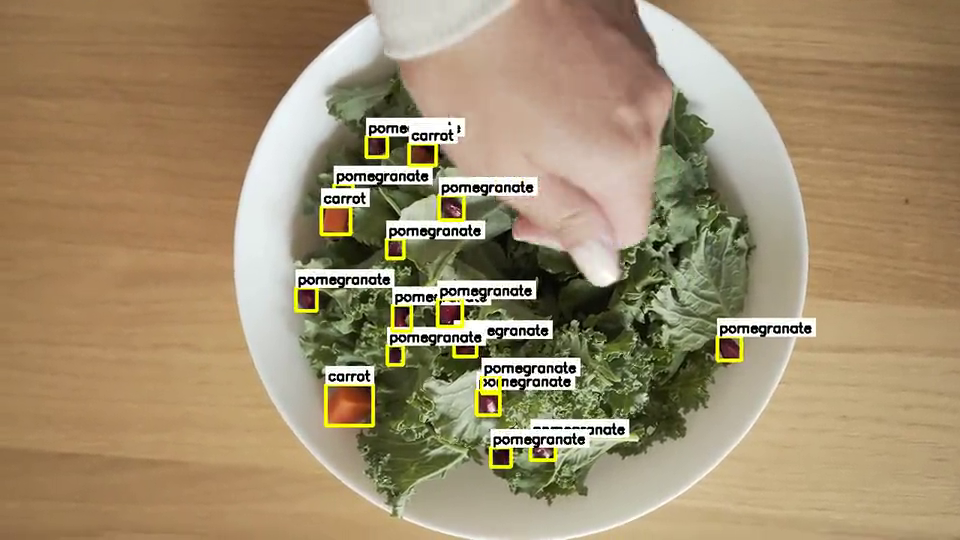
OpenFilter is already being used across a wide range of operational use cases, including:

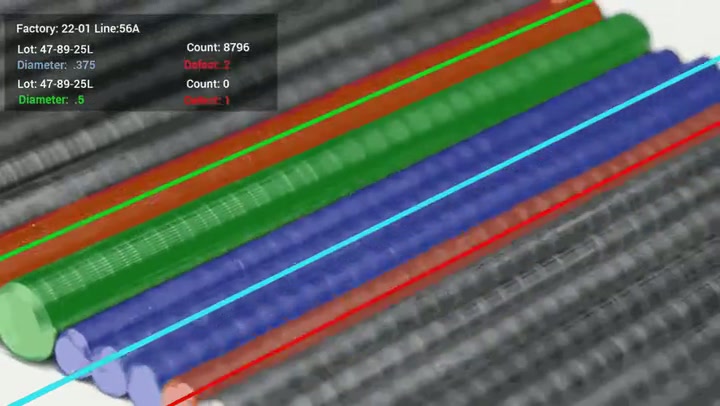
Manufacturing

  • Automated quality inspection
  • Defect detection
  • Fill-level monitoring
  • Production-line analytics

Retail and Food Service

  • Drive-through analytics
  • Inventory monitoring
  • Product counting
  • Operational workflow analysis

Logistics and Warehousing

  • Vehicle tracking
  • Inventory workflows
  • Dock and yard monitoring
  • Process automation

Agriculture

  • Precision farming
  • Livestock monitoring
  • Drone-based analytics

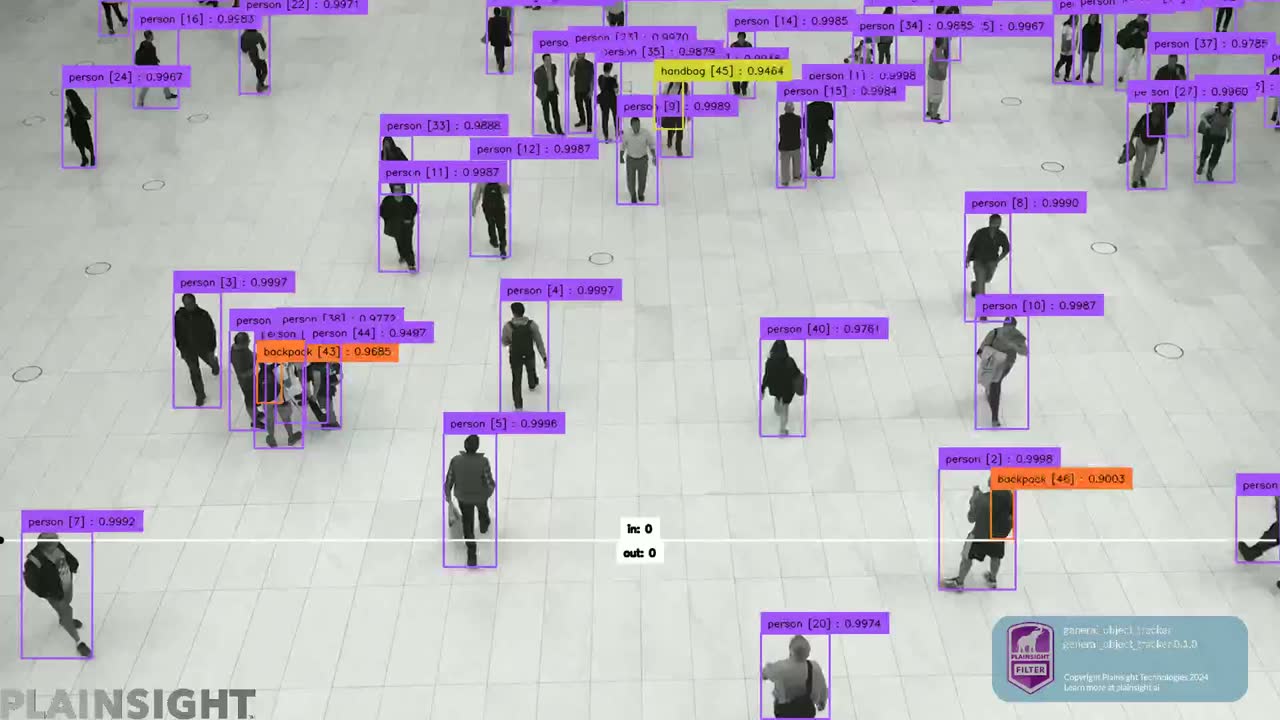
Security and Safety

  • People counting
  • Surveillance automation
  • Safety compliance monitoring
  • Event detection and alerting

Designed for Developers

OpenFilter was built to feel more like software engineering and less like experimental AI infrastructure.

Developers can:

  • Build filters locally using Python
  • Reuse modular pipeline components
  • Integrate existing ML models quickly
  • Deploy pipelines rapidly across environments
  • Extend workflows without rewriting core infrastructure

The Apache 2.0 license also makes OpenFilter accessible for developers, researchers, startups, enterprises, and system integrators alike.

Looking Ahead

OpenFilter 1.0 is a major milestone, but it is also the beginning of a broader roadmap.

Future releases will continue expanding:

  • Interactive real-time filter workflows
  • Telemetry and metrics streaming
  • Advanced orchestration support
  • Multimodal AI integrations
  • Enhanced developer tooling and visualization

As Vision AI becomes increasingly operationalized across industries, we believe developers need abstractions that simplify complexity without sacrificing flexibility.

OpenFilter is our answer to that challenge.

Get Started with OpenFilter

OpenFilter 1.0 is available today as an open-source project under the Apache 2.0 license.

Explore the project:

We’re incredibly excited to see what developers, researchers, enterprises, and the broader open-source community build with OpenFilter.

Welcome to OpenFilter 1.0.


Sources and References

This post incorporates information from:

  • Internal OpenFilter release planning notes
  • https://openfilter.io
  • Plainsight OpenFilter launch materials
  • OpenFilter GitHub repository

No Comments Yet

Let us know what you think