
Most multi-unit QSR and fast-casual operators have a general sense of how often orders go wrong. They see the refunds and hear about the remakes. They read the reviews and track the complaints that make their way to managers or delivery platforms. However, possessing this data does not mean they know their true order accuracy rate. It merely means they know how often a customer decides to say something.
That distinction is critical. Customer complaints function as a delayed signal rather than a true fulfillment measurement system. They indicate that an order has already failed and reached the customer. By that point, the error has created enough friction for the person to report it. By the time a complaint is logged, the opportunity to protect the guest experience has already passed. The restaurant has also likely suffered a quiet hit to its lifetime customer value (LCV) from the guests who experience friction but choose never to report it.
Reported Problems Are Only A Small Part of the Overall Problem
While a refund is easy to track and a complaint is easy to log, each of these signals depends entirely on the customer actively choosing to speak up. This dynamic leaves a massive gap in back-of-house data. According to foundational research by the Technical Assistance Research Programs institute originally commissioned by the White House Office of Consumer Affairs, a typical business hears from only 4% of its dissatisfied customers.
A customer might notice a missing side dish or discover their food delivery is missing condiments without ever leaving a negative review. While they may experience frustration, many of these customers simply adjust their behavior. They might order less often or choose another location. Order frequency drops, leaving the breakdown on the make-line completely hidden.
For multi-unit leaders, this silence creates false confidence. Complaint volumes might look stable and refunds may appear manageable. Meanwhile, the actual rate of kitchen errors could be significantly higher than the data suggests. Relying solely on reported failures causes restaurants to drastically underestimate how poor execution bleeds retention and damages future revenue. Leaders are left managing the visible errors while the rest go unnoticed. Marketing may bring customers through the door, but back-of-house execution determines whether they return.
The Problem With Lagging Indicators
In high-volume food service, there is a fundamental difference between leading and lagging indicators. Leading indicators track real-time execution on the make-line and predict future outcomes. Lagging indicators only reveal the fallout after a shift ends. QSR and fast-casual leaders have traditionally relied on complaints and refunds as their primary lagging indicators for quality. This approach is understandable since these signals are readily available and easy to pull into a report. They allow for simple comparisons across locations.
However, running a restaurant strictly on lagging indicators is like driving while looking in the rearview mirror. A location with fewer complaints might simply serve a demographic that is less likely to speak up. While a sudden spike in refunds points to a real issue, a low refund rate fails to prove the back-of-house workflow is actually operating flawlessly. Online feedback only captures the extreme moments customers feel strongly enough to publish. It provides an incomplete picture of daily kitchen performance. When leaders rely exclusively on these after-the-fact signals, they end up managing the fallout rather than driving actual throughput and accuracy.
The Missing Layer in Restaurant Data
Modern restaurant technology has become exceptionally good at capturing the transaction. POS systems easily track what was ordered and where the digital ticket originated. Loyalty programs identify the specific customer profile.
What remains glaringly missing is a reliable record of physical execution. POS data cannot tell a manager if an order was assembled correctly on the line. Digital platforms cannot confirm if a final quality check happened before handoff. Operators are left completely blind to where the fulfillment process actually broke down.
Without visibility into the assembly process, restaurants operate with an incomplete measurement system. They can see the initial order and the resulting customer feedback. They completely lack insight into the crucial moments in between. That gap makes it incredibly difficult to identify patterns and accurately compare locations, while also preventing managers from grasping the true scale of order accuracy issues.
Why Better Measurement Changes the Conversation
Measuring order accuracy strictly through lagging indicators forces leadership conversations to be inherently reactive. Managers end up asking what happened with a specific customer or investigating why an issue escalated to support. While those questions matter, they are asked far too late in the process.
A superior measurement system shifts the focus toward proactive intelligence. Operators gain the ability to see exactly where errors happen most often. They can identify which workflows break down during peak volume and pinpoint the specific locations consistently missing the mark. Identifying recurring issues that customers rarely report becomes a real opportunity.
This shift is vital because it moves the entire organization from incident response to continuous operational improvement. Chasing individual complaints takes a backseat to fixing the root conditions that cause errors in the first place.
From Guesswork to Make-Line Visibility
Order accuracy should never depend on complaint volume to be understood. Operators need a clearer and more objective way to see what is happening between order placement and customer handoff. A physical visibility layer spanning from the make-line to the expo-station becomes an invaluable asset here.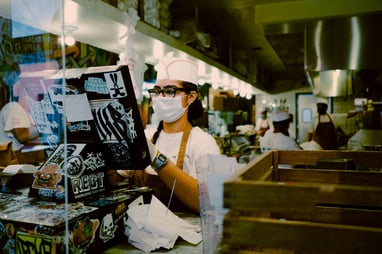
By leveraging any commodity camera infrastructure alongside vision AI, restaurants can generate an objective view of physical execution. They can identify exactly when key steps are missed and where breakdowns occur. This data also reveals how frequently these issues happen across different locations. This technology serves to augment managerial intuition alongside frontline expertise. It empowers those teams with better information so operators can make decisions based purely on factual execution data.
In a high-volume restaurant environment, even the smallest blind spots compound into massive expenses. That is exactly why order accuracy must be measured extremely close to where the actual assembly happens.
How Plainsight Helps
Plainsight gives restaurant operators real-time visibility into their kitchen workflows by transforming any commodity camera infrastructure into AI-powered back-of-house intelligence. For brands demanding an accurate view of order fulfillment, Plainsight introduces a measurable visibility layer stretching from the make-line to the expo station.
This technology enables operators to identify breakdowns immediately and measure execution objectively. The result is improved fulfillment consistency across all locations. Catching errors before they reach the guest allows brands to stop silent churn and actively protect their lifetime customer value. The ultimate goal is to help restaurants understand what is actually happening inside their kitchens so they can proactively ensure all their guests have a positive experience.
Customer complaints highlight when an individual order goes wrong, but fail to reveal how often those errors actually occur.
Stop managing by lagging indicators and start managing by make-line execution. Contact Plainsight today to schedule a demo and uncover your true order accuracy rate.
.png)
From Cybersecurity to Vision AI: Why Plainsight Was the Next Step

VizOps: DevOps for Vision AI

No Comments Yet
Let us know what you think