
You've invested in the POS. You've rolled out the kitchen display system. You've run the QSR software for inventory and cost control. You've got dashboards showing ticket times, refund rates, and throughput numbers by store.
And yet, orders still go out wrong, rush hour still breaks things and the same locations are underperforming. Each time you dig in, you're doing it after the fact, working from incomplete data, trying to reconstruct what actually happened from reports that only tell you what the system recorded.
Here's the hard truth: your data tells you what was entered. It doesn't tell you what actually happened.
That gap, between what your systems report and what occurs physically across your kitchens, prep lines, and fulfillment workflows, is where margin disappears. It's where refunds accumulate. It's where customer lifetime value quietly erodes, one wrong order at a time.
This isn't an operational problem. It's a visibility problem.
What Your POS Can't See
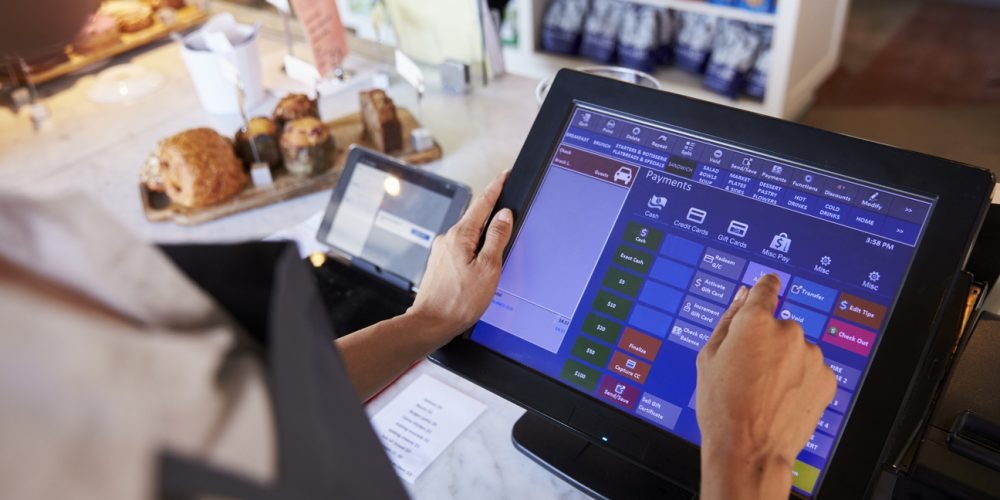
Your POS system is a transaction record. It captures what was ordered, what was charged, and what was marked complete. It does not see whether the right ingredients were assembled. It does not see whether the bag was checked before it hit the counter. It does not see the bottleneck building at the sandwich station at 12:08 p.m. on a Friday.
This is the core limitation of every restaurant technology solution built on transactional data: it reports what people entered, not what people did.
For low-volume environments, that gap is manageable. For QSR operations running hundreds of locations and thousands of orders per day across digital, delivery, and kiosk channels, that gap becomes a structural risk. Every order that leaves incorrectly represents a refund cost, a remake cost, a lost repeat visit, and a potential one-star review on a delivery app that compounds across thousands of impressions.
The operational visibility gap isn't new. But the stakes have risen sharply as digital and delivery orders now make up a larger share of volume, and those orders have zero tolerance for error. A wrong order in the dining room can be fixed at the counter. A wrong order delivered to someone's home is a refund, a bad review, and a lost customer.
Why Kitchen Display Optimization Alone Isn't Enough
Kitchen display systems and kitchen display optimization tools have improved throughput and communication in back-of-house environments. However, your KDS tells your team what to make, it doesn't verify that they made it correctly.
There's a difference between displaying an order and verifying an order.
When you're running at peak volume, 200 covers in 90 minutes, a DoorDash queue building alongside in-store demand, and two team members short on the line, the gap between what the KDS shows and what gets assembled and sent out grows. Not because your team isn't trying. Because manual checks break down under rush-hour pressure.
Order accuracy at scale requires a layer that sits between the digital ticket and the physical handoff. Something that can verify assembly in real time, flag exceptions before they become refunds, and give your ops team the data to understand where and when accuracy degrades, not just that it did.
The Visibility Layer That's Been Missing
What QSR operations actually need isn't more software for tracking transactions. It's a way to see what's happening physically, across kitchens, prep stations, and handoff points, in real time.
This is the role computer vision plays in modern food service operations. Not as an AI experiment or a surveillance system, but as a process verification layer that bridges the gap between your digital systems and your physical reality.
When cameras are already in place across your back-of-house, which they are, in most QSR locations, that infrastructure can be put to work verifying orders against tickets, identifying station-level bottlenecks during rush, detecting low or missing ingredients before they cause line stoppages, and measuring dwell time and throughput across the fulfillment workflow.
The result isn't a new dashboard. It's operational visibility you've never had before: the ability to see what's actually happening, shift by shift, store by store, and intervene before small breakdowns cascade into customer failures, refund costs, and reputational damage.
What This Looks Like in Practice
For a leader of operations overseeing 300+ locations, the real ROI question is always: where is margin leaking, and can I stop it at scale?
Here's how that plays out with real operational visibility:
Order accuracy verification means you're no longer estimating your baseline error rate from refund data. You can measure it directly, by time of day, by shift, by station, by store. You can see which locations outperform and which ones consistently struggle, and you can attribute that to process, training, or layout, not just "the team."
Rush-hour throughput optimization means you can see station-level bottlenecks as they build, not after they've already cost you throughput. You can benchmark Store A against Store B in ways that POS data alone can't support.
Back-of-house inventory gap detection means you know about a missing ingredient before it forces a substitution or causes a line stoppage at 8:15pm. That's a recovery opportunity. Without real-time visibility, it's just a complaint at the end of the shift.
Each of these is a margin protection story resulting in fewer refunds, fewer remakes, and more correct orders per hour during peak. Resulting in higher customer lifetime value because the experience is consistent.
The Qualification That Matters Most
If your locations have cameras, and most QSR environments do, the infrastructure for operational visibility already exists. The question is whether it's being used to verify what's actually happening, or just to record it.
The best AI software for restaurants isn't the one that adds the most complexity. It's the one that uses what you already have to close the gap between what your systems report and what actually occurs. Edge-first processing means you don't need to rebuild your infrastructure. Privacy-by-design means you're verifying process, not monitoring individuals. And a 30–60 day pilot on order accuracy gives you the data to validate ROI before you commit to anything at scale.
Verify what is on your KDS and your POS is aligned before by the time the bag hits the counter. Plainsight helps QSR operators verify order accuracy, optimize rush-hour throughput, and close the visibility gap between digital systems and physical operations — using the cameras already in place. Learn more about how it works here.
No Comments Yet
Let us know what you think